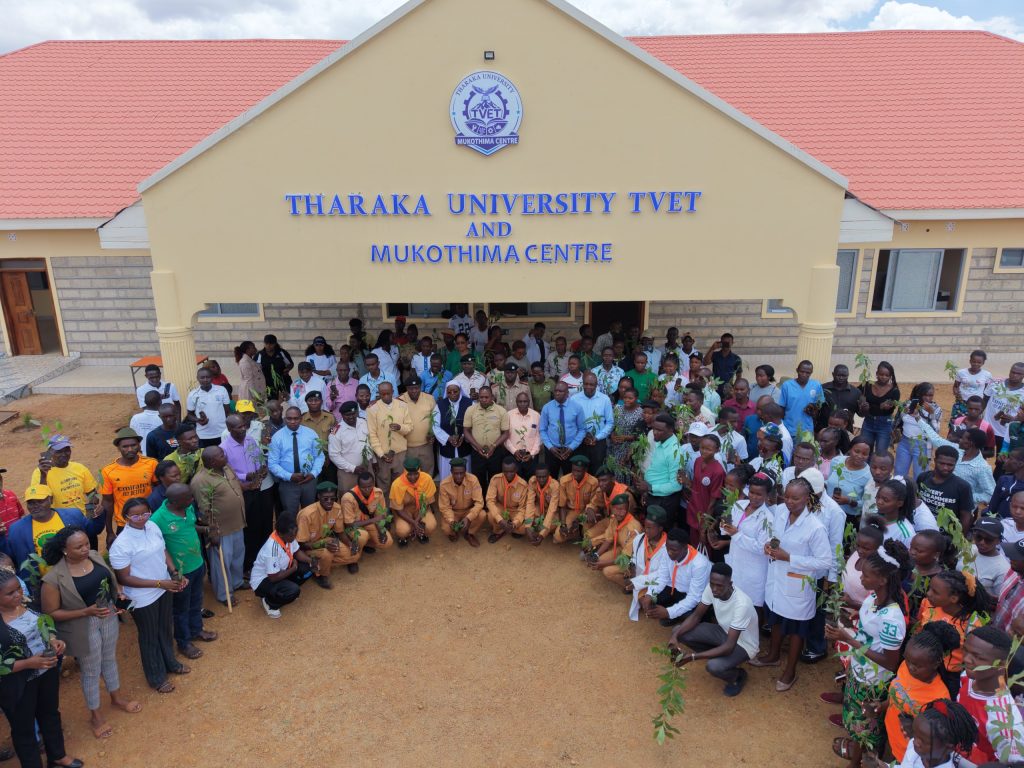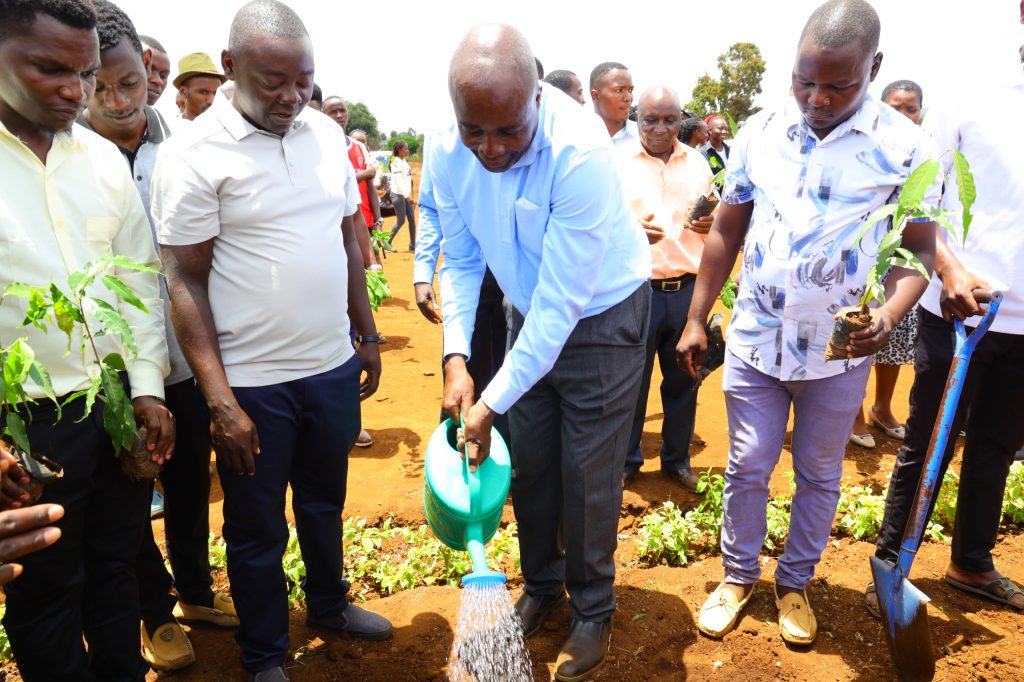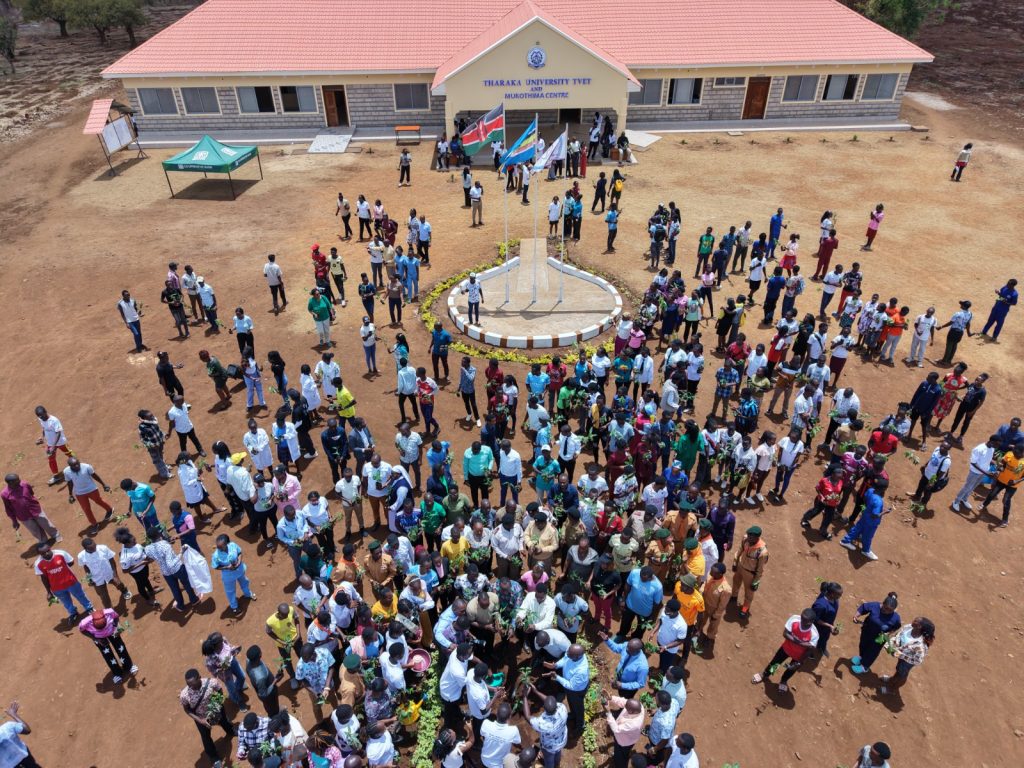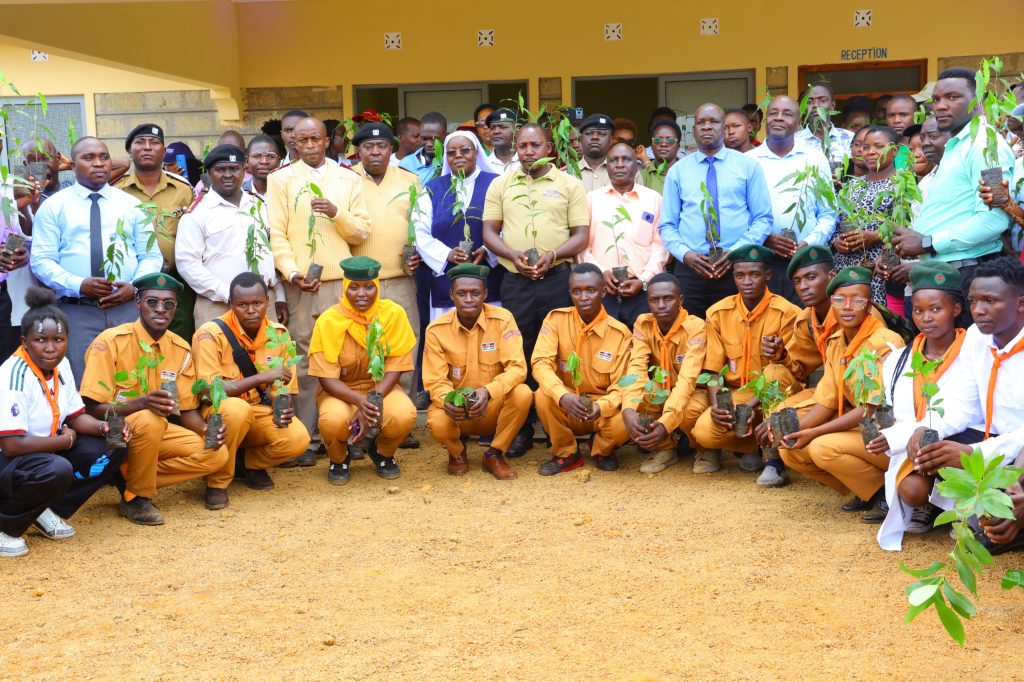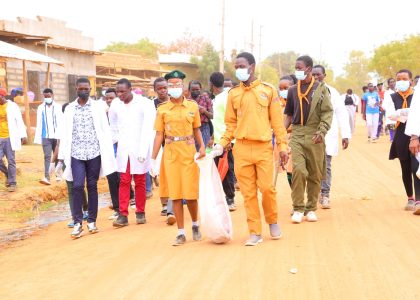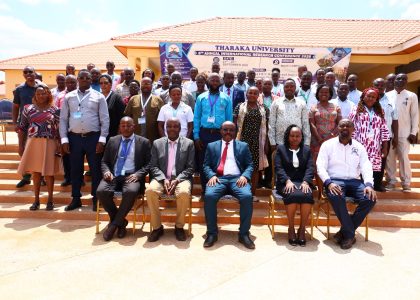
Tharaka University (TUN) marked the second day of Mazingira Week with a tree-planting exercise held at the Tharaka University TVET and Mukothima Centre. The activity brought together university management, government officials, staff, and students.
The Deputy Vice-Chancellor in charge of Administration, Finance and Planning (DVC-AFP), Prof. Collins Miruka, the Director of Tharaka University TVET and Mukothima Centre, Dr. Faustine Muchui, the Director of Research, Dr. Alex Muthengi, deans, and various heads of departments, participated in the tree-planting drive.
The exercise formed part of the national environmental conservation campaign, which seeks to increase tree cover and promote the restoration of degraded ecosystems. Kenya’s current national tree-growing campaign targets planting 15 billion trees by 2032.
Dr Muchui thanked the government for recognising the importance of environmental conservation and setting aside time for tree-growing activities.
He also thanked Tharaka University Vice-Chancellor, Prof. Peter K. Muriungi, for supporting the tree-planting campaign.
Dr Muthengi called on the university community and the public to embrace environmental conservation.
He thanked those who had participated in the previous day’s activities and encouraged more people to join in the remaining days of Mazingira Week.
The Registrar, Administration, Finance and Planning, Dr Edward Kathuni, recognised the Njuri Ncheke elders present during the tree planting drive.
He announced that Tharaka University plans to plant about 260,000 seedlings in different locations.
The planned sites include Keeria Hills in Maara, where 150 seedlings will be planted; Kiamuriuki in the Mount Kenya Forest, with 50 seedlings; and Mutaranga in Chiakariga, where 40 seedlings are planned.
The university also intends to donate 20,000 seedlings to schools to support environmental conservation among learners and local communities.
Dr Kathuni urged institutional leaders to coordinate the tree-growing programme effectively and ensure that the seedlings are planted in suitable locations. He noted that environmental conservation requires more than planting trees, as they must also be cared for and protected to survive.
Prof. Miruka recognised the government officials, university management and other guests present as he officially launched the tree-planting exercise.
The activity ended successfully, with participants reaffirming the importance of protecting the environment and supporting tree-growing initiatives within the university, schools and surrounding communities.